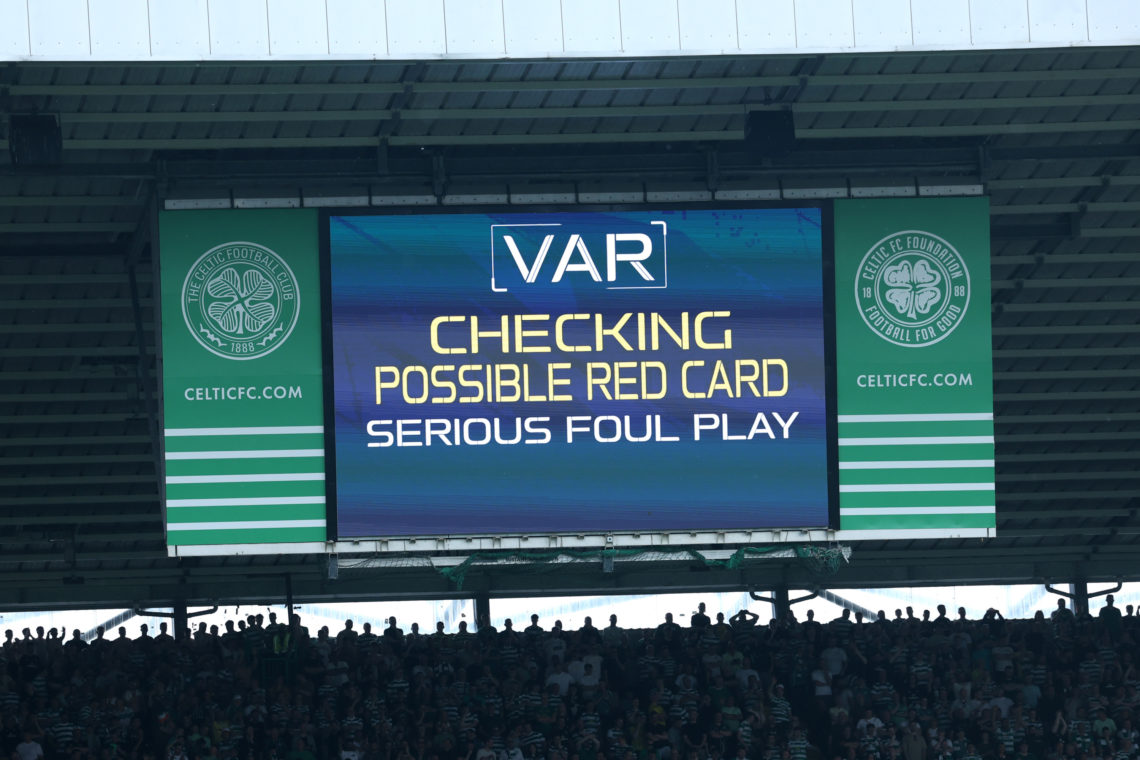


Celtic’s home advantage is often framed as something more than atmosphere, but the claim that referees are influenced by the Parkhead crowd does not stand up to scrutiny.
It is a familiar argument that surfaces whenever a big decision goes Celtic’s way, especially at home.
The suggestion is simple, the noise, the pressure, and the environment combine to tilt calls in Celtic’s favour.
But that narrative begins to fall apart when you look at how decisions are actually made in real time.
VAR in Scottish football: incompetent refs, bad technology or both?

Celtic Park myth does not match how referees actually work
Former referee Des Roache, who was involved at the top level, has made it clear that the decision-making process is far more basic and far quicker than many assume.
Roache told the Let Me Be Frank podcast, “I would say that you just see an incident. You don’t see green, white, red, blue, black, what you just see a foul and you call it. It takes a nanosecond, so if you can actually be influenced, sorry if you can try and influence a decision because you got a preference for one team, or you’re getting an influence from the crowd. No, I don’t buy it.”
That explanation leaves little room for the idea that atmosphere or pressure can shape a decision in the moment.
When calls are made at that speed, there is no time to process anything beyond the incident itself.
Celtic debate ignores the speed and reality of decision making
What tends to happen instead is that decisions are analysed long after the moment has passed, when replays and angles create a different picture.
That gap between real time and slow motion is where perception builds, and where claims of bias often take hold without firm evidence.
The debate around Celtic and refereeing decisions continues, but the reality of how those calls are made leaves little room for the theory that Parkhead itself is shaping outcomes.
Receive a digest of our best Celtic content each week direct to your mailbox