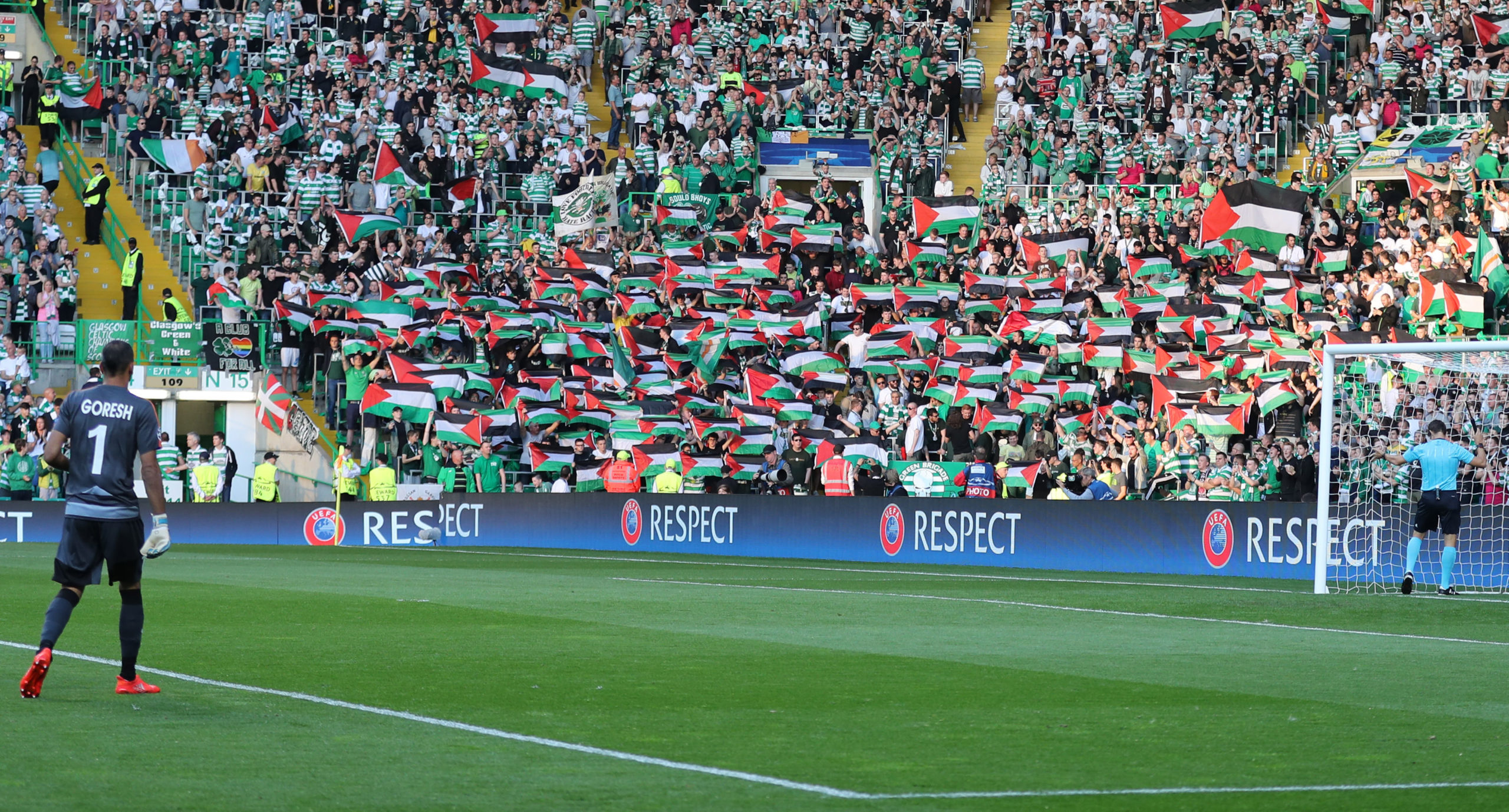


During another flare-up in the Israel/Palestine conflict, Celtic supporters’ group the North Curve have unveiled their unflinching support for Palestinian rights.
Over recent days, Palestinian authorities have claimed that 43 lives, including 13 children, have been lost [Al-Jazeera]. Yesterday, Israeli Prime Minister Benjamin Netanyahu has vowed to increase attacks on Gaza [Guardian]. There have been weeks of tensions, with AP describing the most recent events thusly:
“The latest clashes began a month ago with an Israeli move to block some Palestinian gatherings at the beginning of the Muslim holy month of Ramadan, already a time of heightened religious sensitivities. After those restrictions eased, tensions over a plan to evict dozens of Palestinians from an east Jerusalem neighborhood [sic] continued to fuel confrontations.”
Support for the Palestinian people from Celtic supporters have made the club popular in the Middle East. In an interview with 67 Hail Hail, filmmaker Jamie Doran described the response to Celtic’s pro-Palestinian demonstrations at a match against Hapoel Be’er Sheva [Al-Jazeera].
“The reaction to those fans flying the Palestinian flag was immense. You cannot understand how big it was at the time.
“Literally no matter where you go, you come across this understanding that Celtic means much more than kicking a ball.”
So, it follows that with recent events in mind, the politically active groups within the Celtic support are demonstrating.
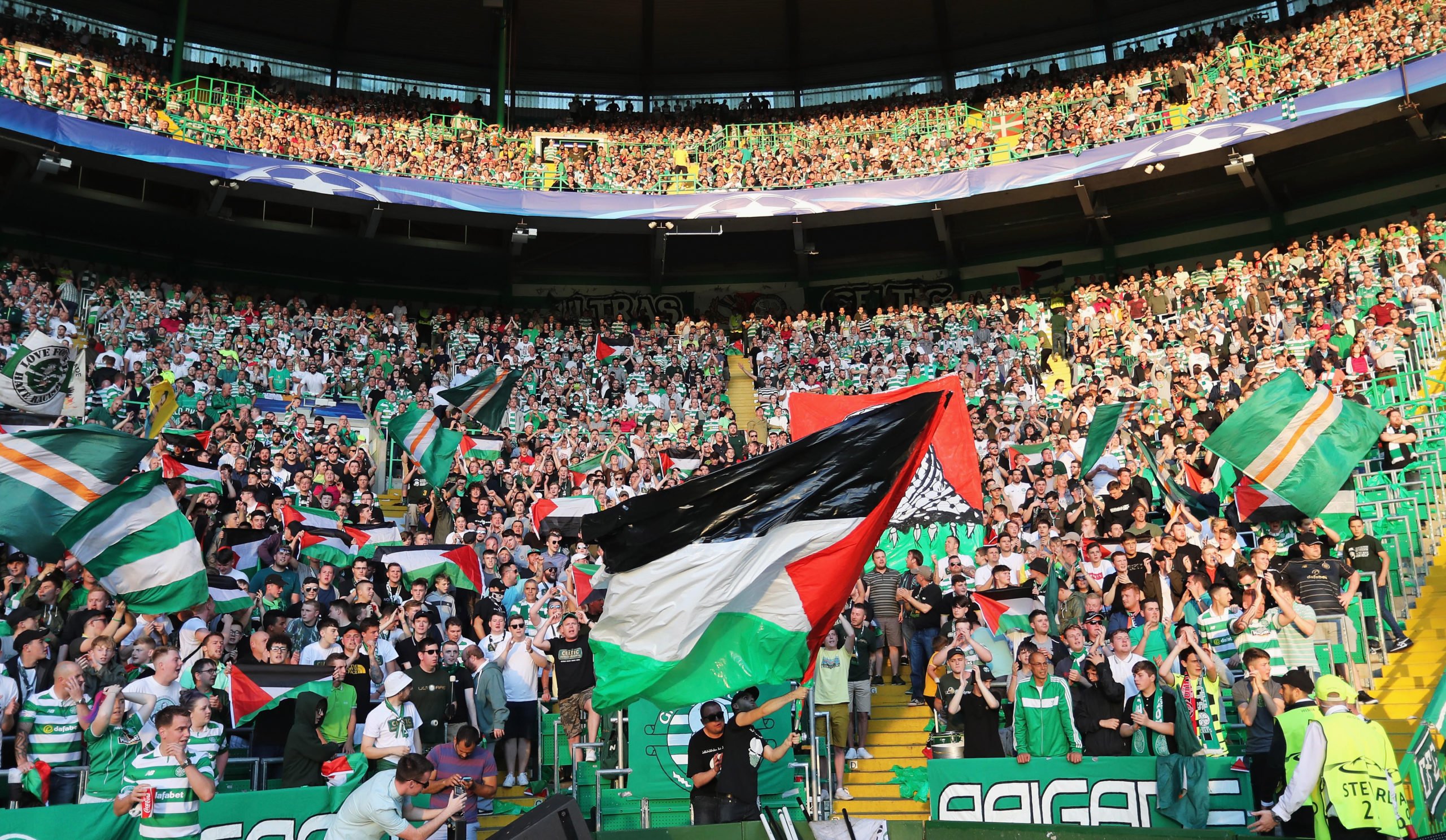
For many Celtic fans, solidarity with Palestine is important
Given the demographics of Celtic supporters, so many of whom come from the Irish diaspora, the links with international struggles are obvious.
The World Weekly described the similarities, writing:
“Celtic supporters are sympathetic to the Palestinian cause because their ancestral story is, for the most part, similar. To understand why Celtic fans are vocal about the struggle of the Palestinians, you need to understand where many Celtic fans come from.
“Celtic fans have also shown solidarity with the oppressed people of South Africa under apartheid, the Basque people seeking independence from Spain and, of course, due to the club’s cultural heritage, the oppression and persecution of nationalists in the north of Ireland. The majority of these areas of conflict have been resolved amicably: the plight of the Palestinians has become increasingly worse.”
Receive a digest of our best Celtic content each week direct to your mailbox