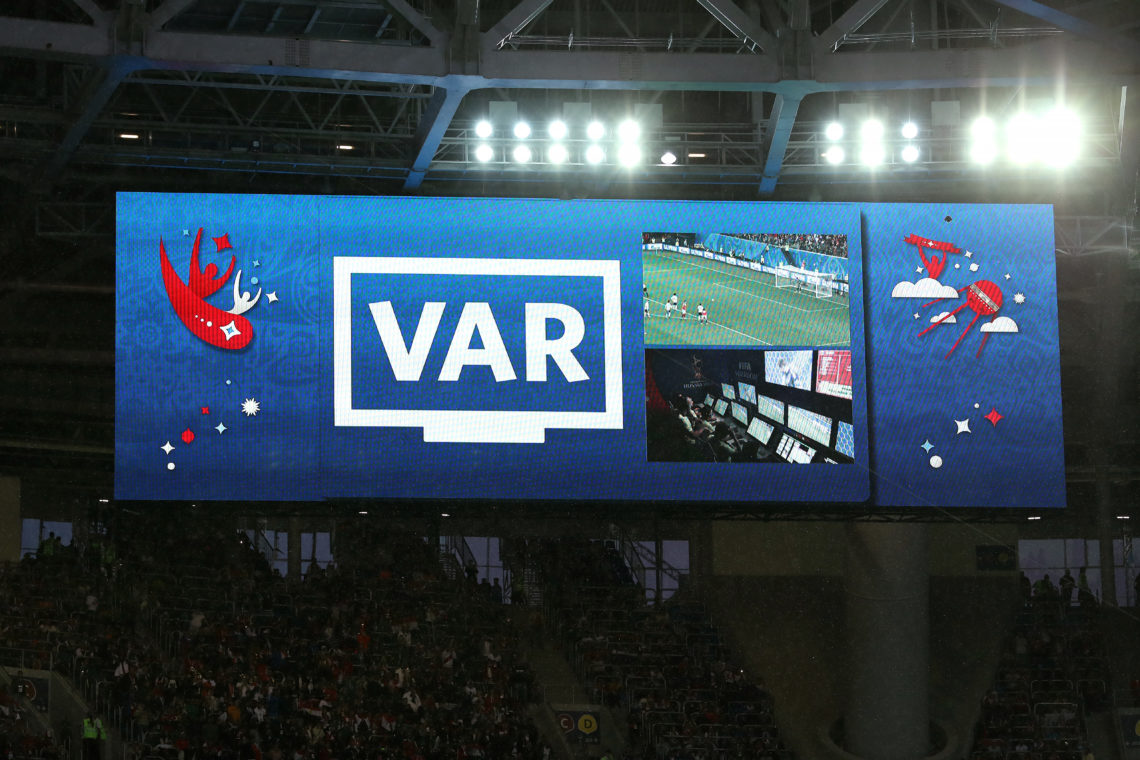


With VAR being introduced into Scottish football this week, it’s important to note what is and isn’t available to referees when determining big calls.
Celtic’s match against Hearts this weekend will be the first time the Bhoys have experienced the system in a domestic match under the jurisdiction of the Scottish FA, although it was been used in our European fixtures plenty of times previously.
It would be reasonable to assume that included in the VAR installation is goal-line technology (GLT), used to quickly find out whether the ball has crossed the line or not in tight situations, but that isn’t actually the case – it’s a version of VAR without that in place.

BBC Scotland report that this is chiefly due to the extra costs involved, while the Scottish FA officially have a “not at the moment” answer to the question of GLT’s use.
It’s not unprecedented – other leagues around the world also use VAR without GLT in place, such as Major League Soccer across the Atlantic.
Back in 2017, an SPFL spokesman told the BBC that it would ‘cost millions’ to install in stadiums across Scotland, stating: “Goal-line technology has been a proven aid to referee decision-making where it has been installed around the world and is a very good example of technology enhancing the game. In common with most other leagues outside the most wealthy in Europe however, goal-line technology remains unaffordable for the SPFL.”
Decision-makers here have instead decided to focus on the cost of the more versatile VAR system instead, rather than additionally pushing the boat out for GLT. However, it could cause understandable confusion to supporters, who may just assume it is included.
A minimum of six cameras will be in operation at every game. That includes two on the main gantry, one looking along each 18-yard line, one high up behind one goal, and one low down behind the other.
Obviously, it may be possible to determine whether a ball has crossed the line from these angles, but it won’t be automatic or as accurate as some may like, in line with more illustrious leagues.
GLT is, however, used at Hampden, so cup semi-finals and finals will benefit from its use.
In other news, We’re about to see more of Oliver Abildgaard at Celtic.
Receive a digest of our best Celtic content each week direct to your mailbox