
Celtic and Liverpool found themselves navigating the same controversy on Sunday, albeit with different outcomes.
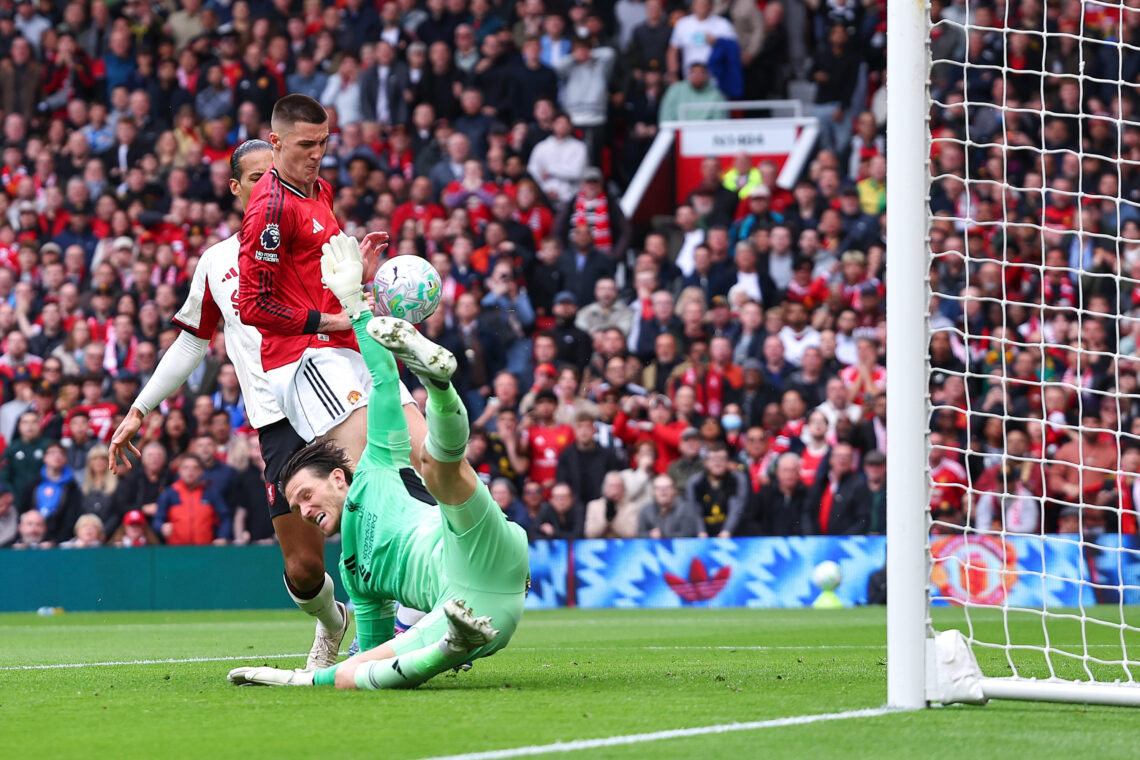
While Martin O’Neill’s Celtic ground out a crucial victory over Hibernian at Easter Road, Liverpool suffered a morale-crushing defeat to bitter rivals Manchester United at Old Trafford.
Yet, both games shared one problematic common theme: decisive goals being allowed to stand despite the scorer handling the ball.
Joe Newell’s equalising goal stood at the end of the first half, despite the ball brushing his arm, while Benjamin Sesko scored United’s second goal during their 3-2 win after the ball glanced his hand.
The ultimate frustration connecting both of these controversies was the familiar roadblock offered up by the officials reading the rule book, with VAR simply hiding behind the all-too-common excuse of ‘insufficient’ or ‘inconclusive’ evidence.
Do you agree with Mark Clattenburg on Hibs’ goal against Celtic?


Should Joe Newell and Benjamin Sesko’s goals have stood?
Anyone watching the Champions League last week, Paris Saint-Germain’s goal-crazy game against Bayern Munich and Arsenal’s clash at Atletico Madrid, would have noticed a series of handball calls that sparked widespread debate.
This stems from a glaring difference in how the rules are applied on Europe’s biggest stage compared to domestic action.
UEFA’s incredibly strict guidelines dictate that if the ball strikes an outstretched arm or hand of a defensive player inside the penalty box, a harsh punishment is almost inevitable – in this case, penalties were awarded.
That draconian UEFA approach isn’t implemented in the English Premier League, but it is in the Scottish Premiership – but that’s defenders handling the ball.
However, when it comes to an attacking player handling the ball, everyone is aligned, and the golden rule is universally accepted: if an attacker handles the ball immediately before scoring, the goal shouldn’t stand.
| Why Newell’s goal stood against Celtic | Sky presenter Eilidh Barbour: “The VAR opinion, in what was quite a lengthy check, is that there ‘wasn’t enough sufficient evidence’ to overturn the on-field decision.” |
| Why Sesko’s goal stood against Liverpool | Sky presenter David Jones: “VAR again, if you weren’t watching at half-time, said there was ‘inconclusive evidence.’ Liverpool were pretty convinced that this does go in off Sesko’s hand.” |
That is one of many reasons why VAR was introduced to police, overturn and eradicate.
Yet, frustratingly, for both Celtic and Liverpool, the controversial goals they conceded were allowed to stand simply because officials cited ‘insufficient evidence’ or ‘inconclusive evidence’ to overturn them.
That begs the question.
In this multi-billion-pound industry, with cameras on every corner. If you can’t tell if the ball does or doesn’t come off an individual’s hand or arm, then what is the point of the technology?
This is where there is a concern, and time and time again, this excuse will be rolled out, and it will continue to be costly for those on the receiving end of it.
Receive a digest of our best Celtic content each week direct to your mailbox