Rangers taking the Celtic ticket dispute to the SPFL has done more than settle one matchday issue, it has forced the SPFL to admit and fix a failure in the league’s rules.
The governing body’s own statement makes clear that the system the SPFL had in place was not equipped to handle a late escalation of this scale.
The most important outcome here is not the 5% allocation Rangers will get for the Celtic clash, but that the SPFL now has to change its own rules after admitting the current process does not work under pressure.
What’s your message to Rangers after the SPFL sided with Celtic?
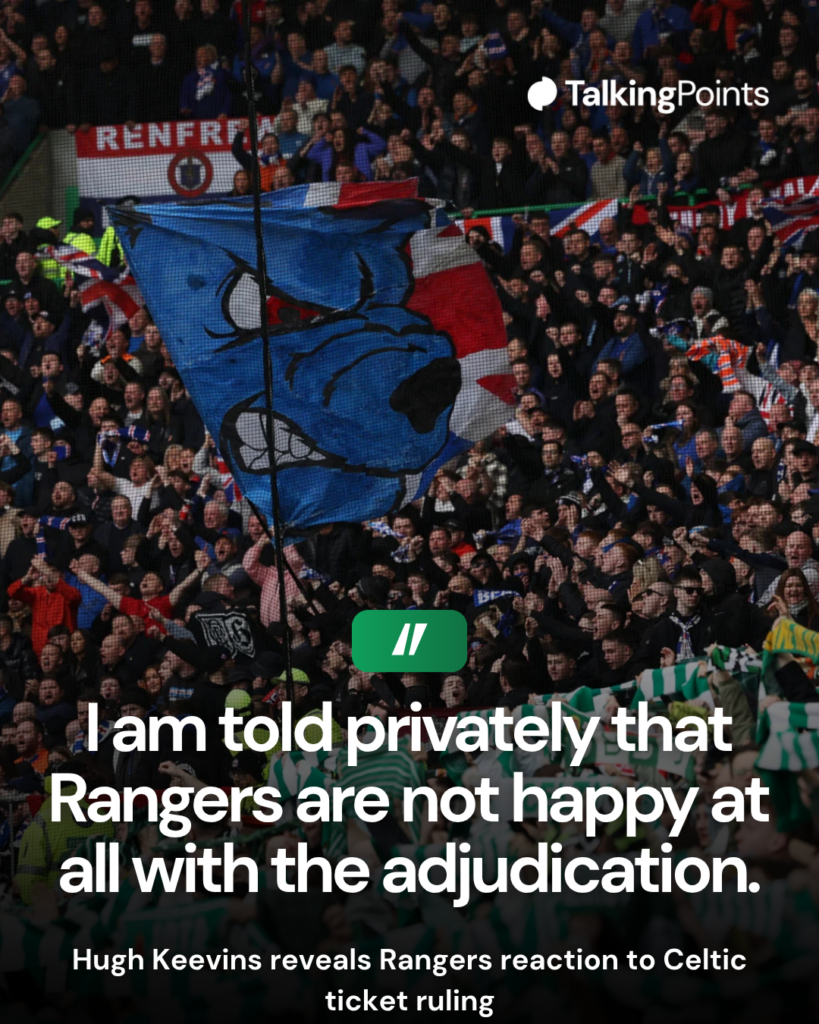
Celtic vs Rangers ticket row exposes SPFL rules
Rangers referred the dispute to the SPFL on April 24, forcing the league to intervene in a situation the clubs had failed to resolve themselves.
That move came just 16 days before the match, a timeline the SPFL itself highlighted as a serious limitation on its ability to assess the situation properly.
The issue is not just the disagreement, but the fact it landed inside a system of rules that could not deal with it at short notice.
This is the central failure, the rules allowed escalation, but the SPFL did not give itself sufficient time to assess the full situation properly.
The SPFL rule change was already coming, Celtic just accelerated it
The key line in the entire statement comes from the SPFL spokesperson, who confirmed the league had already been working toward reform before this dispute.
“We note the decision of the independent Sub-Committee. We have been consulting with all clubs for months regarding the rules in this area and had achieved consensus that the current deadline of 14 days before a match for a referral to the SPFL Board is insufficient to allow a proper forensic analysis of the circumstances.
“Following discussion at the SPFL’s Rules & Regulations Working Group, we had intended to table a resolution at the June AGM to bring forward the deadline to 35 days prior to a fixture and will now take time to reflect on this decision.”
This confirms that a shift to a 35-day deadline prior to a fixture was already planned following consultation.
It also confirms the underlying issue, that the current 14-day deadline is insufficient to properly assess disputes of this scale.
Rangers escalating the issue when they did has forced that weakness into the open, turning a planned rule change into an urgent one.
This dispute will not just be remembered for the ticket allocation. It will also be remembered for what it exposed within the SPFL’s governance structure.
The rules were already under review, but this case has made it clear the SPFL now has to bring forward that change and fix a system it has admitted does not work.
Receive a digest of our best Celtic content each week direct to your mailbox