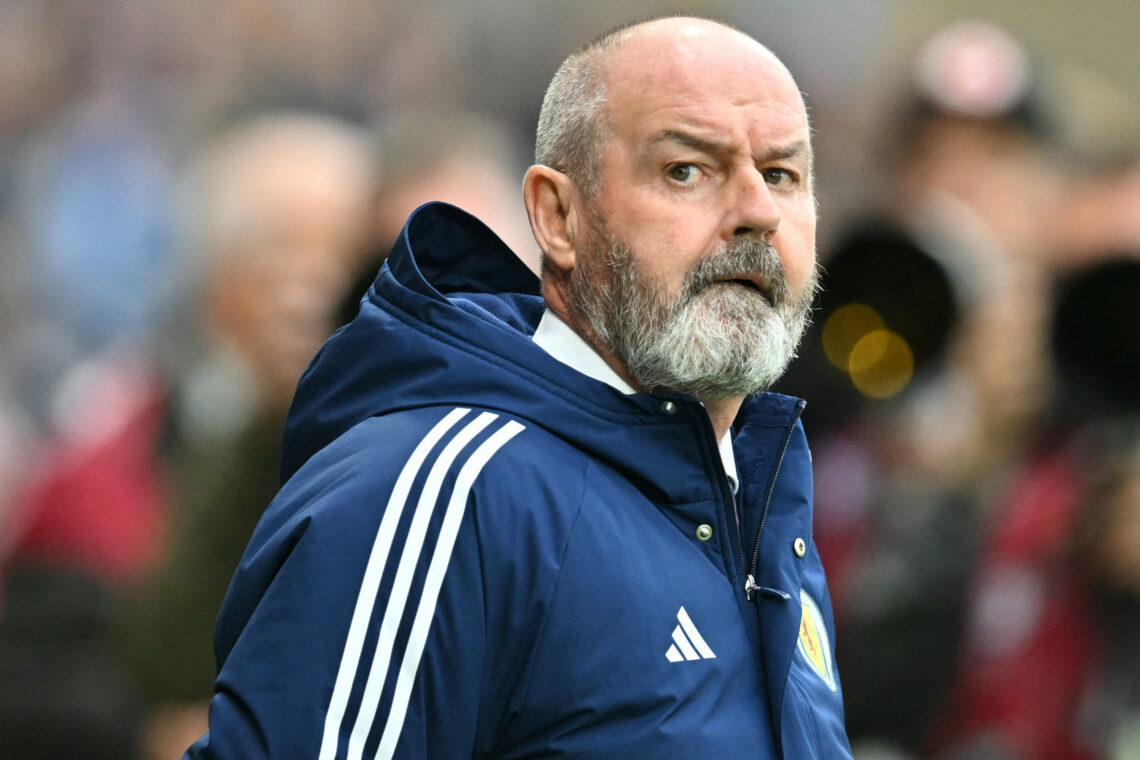


While Steve Clarke’s record with the national team is undeniably historic, the transition from international pragmatism to the relentless expectations of Celtic is fraught with risk.
For a club at a crossroads this summer when Martin O’Neill finally hangs up his Celtic cape, the club must avoid the temptation of appointing Clarke as it could feel more like a step into a defensive shell than a leap toward a modern, dominant identity.
As Clarke casts doubt on his Scotland future and waits to see if clubs will make an offer, it should not be Celtic who decide to test that water.
Here is why Celtic should look beyond Clarke for their next era:
- READ MORE: Sebastian Tounekti details the ‘nasty’ pitch invasions from Rangers fans after Celtic’s Ibrox win
Who would you prefer to become the next Celtic manager?
Tell us why in the comments…
Celtic don’t need Steve Clarke’s pragmatism
Celtic’s DNA is built on ‘the Celtic Way’ and a commitment to expansive, attacking football. Clarke’s success is rooted in the opposite.
Even when at Kilmarnock, Clarke was structurally rigid, deployed a deep defensive block, and played for the counter attack.
While this wins games for an international side, that style of football will simply not be tolerated by 60,000 Celtic fans inside Parkhead who will end up watching their team struggle to break down a low block from a bottom-six Premiership side.
The style of football would lead to friction with the fans before the first ball is even kicked.
Celtic is not a part-time job
Managing a club is a 24/7, 365-day tactical grind. Clarke has been out of the club game since 2019.
The day-to-day management of a high-pressure squad, the constant recruitment cycles, and the rapid tactical shifts of the modern game are different beasts than the part-time nature of international football.
Celtic cannot afford a manager who needs time to re-adjust to the pace of club life, as fans have seen what that instability can bring after watching this season unfold.
Celtic in Europe
Clarke has proven he can make a team hard to beat, which is a baseline requirement. However, Celtic’s next evolution must involve making a dent in the Champions League or Europa League.
Clarke’s defensive tactics would cap the ceiling of a Celtic team looking to compete with Europe’s elite.
To compete with modern European sides, Celtic needs a progressive, high-pressing system, something Clarke has rarely deployed throughout his long career.
Celtic recruitment and global appeal
A new manager at Celtic acts as a magnet for talent. Even with the likes of Brendan Rodgers and Martin O’Neill at the helm, the Parkhead club’s recruitment policy has been shambolic.
O’Neill and Rodgers could attract big-name players, and while Clarke is respected in the UK, a more modern or continental appointment often opens doors to broader scouting networks to attract players.
Clarke represents the known quantity of Scottish talent, and there is room for that at Celtic, but to progress on the continent, a visionary who can bridge the gap between domestic dominance and European respectability is required at Celtic and Clarke may not be the man for that.
Receive a digest of our best Celtic content each week direct to your mailbox