

Celtic and Rangers have issued sharply contrasting responses to the independent review into the disorder at Ibrox.
The review into the Ibrox chaos was finally released more than four months after the match, and it wasn’t a good look for Rangers or Police Scotland.
Much of Rangers’ statement was built around Celtic’s ticket allocation for the match and the lack of scrutiny that fell on the SFA.
But there were six findings in the independent review that make Rangers’ position look extremely weak.
What did you make of Brian Wilson’s statement on the Ibrox row?
Let us know in the comments.
Rangers’ Celtic ticket argument collides with three Ibrox findings
The lengthy Rangers statement attempted to defend the club’s preparations, insisting: “Our operational plan for the match was materially enhanced to reflect the allocation and subsequent risks identified.”
First, Celtic’s allocation was a competition rule rather than an optional agreement. Rangers were free to dislike the rule, but they were still responsible for preparing properly for its application.
Second, Rangers lost ten days disputing that entitlement. The review found that the original four-week planning period was ultimately reduced by half. Days spent contesting the allocation were days lost to preparation.
Third, Rangers’ risk assessment was near-identical to the league fixture played seven days earlier despite 5,600 additional Celtic supporters and the possibility of extra-time and penalties.
The larger allocation clearly changed the scale of the organisation of the fixture. The review’s criticism is that Rangers knew that and still failed to build a plan matching it.
Celtic warnings expose the holes in Rangers’ Ibrox defence
Celtic’s statement was short and to the point. Fourth, Celtic’s safety officer was not consulted when Rangers and Police Scotland designed the revised away ingress plan.
Celtic also raised objections to how their supporters would be brought into the stadium. Quite simply, Rangers warned about the number of Celtic fans, while Celtic warned about the plan itself.
Fifth, only five search lanes were provided for 8,042 Celtic supporters and no fan-flow calculations were completed.
There was inadequate contingency planning for ticketless supporters, doubling-up and forced entry. Those were not unpredictable events. They were precisely the risks the plan was supposed to manage.
Sixth, and most importantly, Rangers held the operational responsibility for the organisation of security for the fixture. They also criticised the level of scrutiny applied to the SFA.
The review says Rangers were responsible for stewarding, safety management, risk assessment and operational planning at Ibrox. The Scottish FA operated the competition but did not design or deliver the stadium operation.
Ticket rules can be debated, but they do not absolve Rangers or Police Scotland of responsibility for safety inside and around Ibrox.
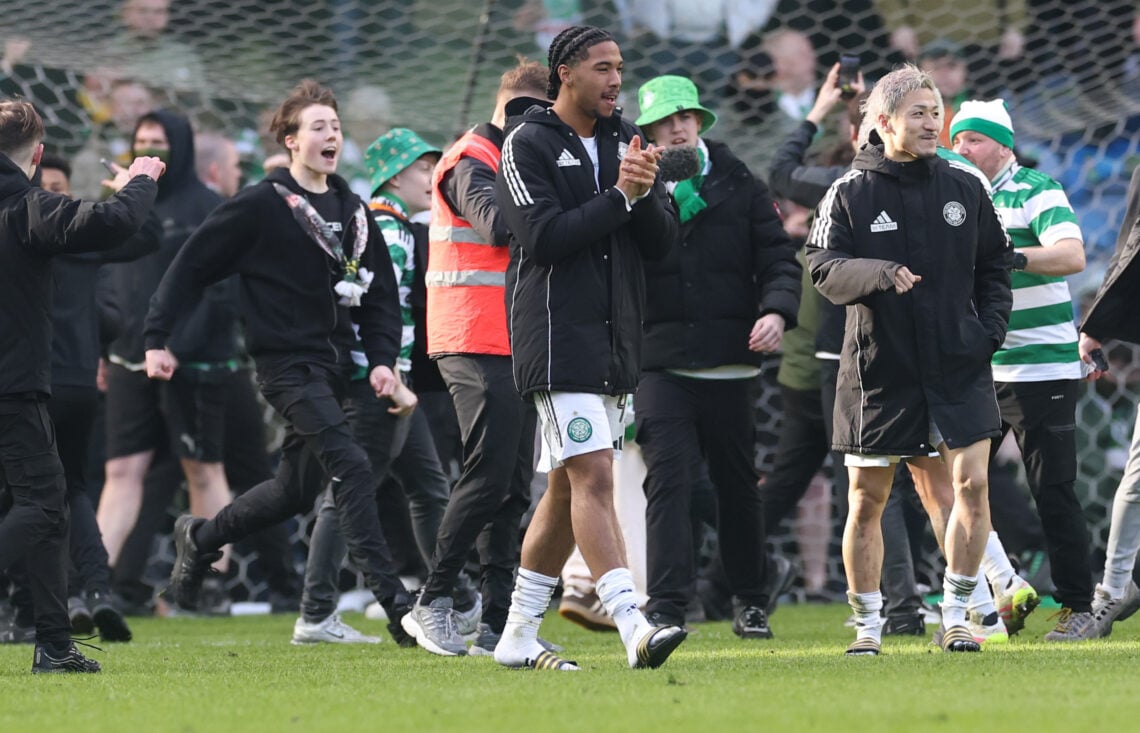
The review also described the post-match pitch invasion by several hundred Celtic supporters as wholly inexcusable and said it provoked the immediate response from sections of the home crowd. That misconduct cannot be defended, but it does not erase the separate planning failures identified before the match.
Rangers are entitled to say that 8,000 Celtic supporters created a far greater operational challenge than a routine league allocation. What their statement cannot explain is why valuable planning time was lost, Celtic’s warnings were disregarded, and why a proper risk assessment was not carried out.
The Celtic allocation increased the risk at Ibrox, but the independent review shows Rangers failed to manage the risk they knew was coming.
Receive a digest of our best Celtic content each week direct to your mailbox