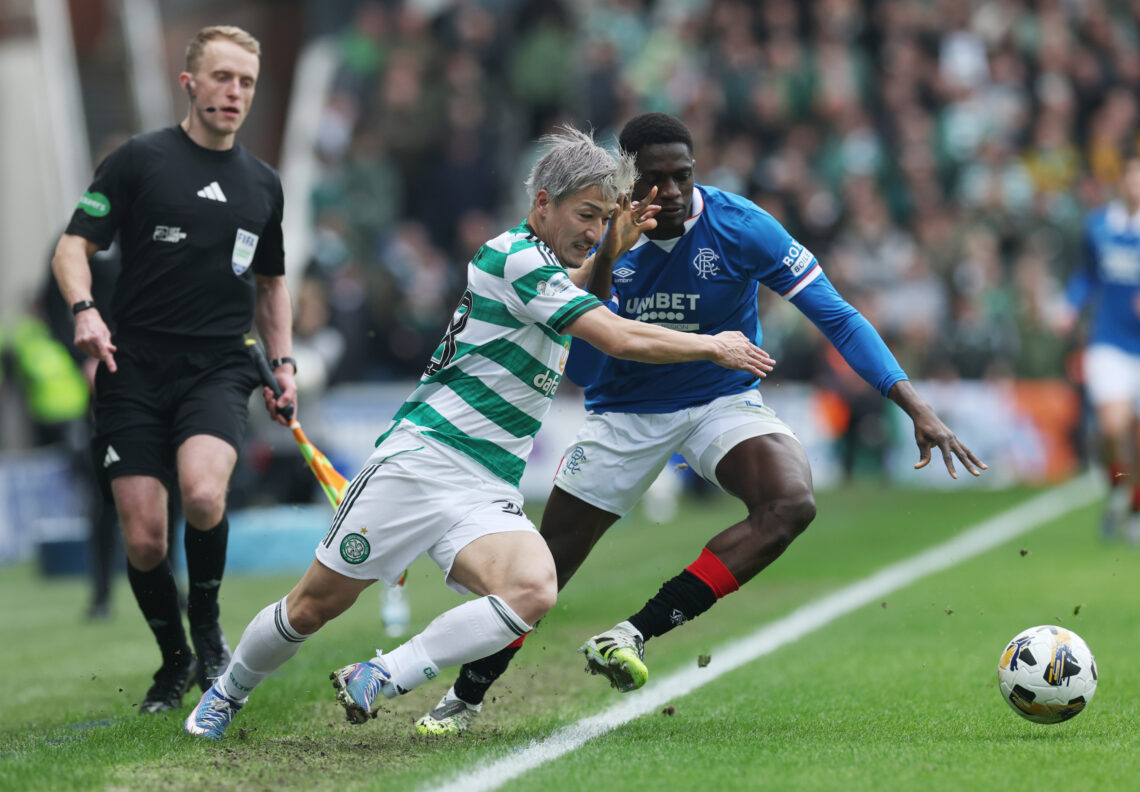

Mark McGhee has offered a fascinating, albeit interesting, perspective on the modern Celtic and Rangers rivalry, suggesting the fixture has lost its on-pitch identity.
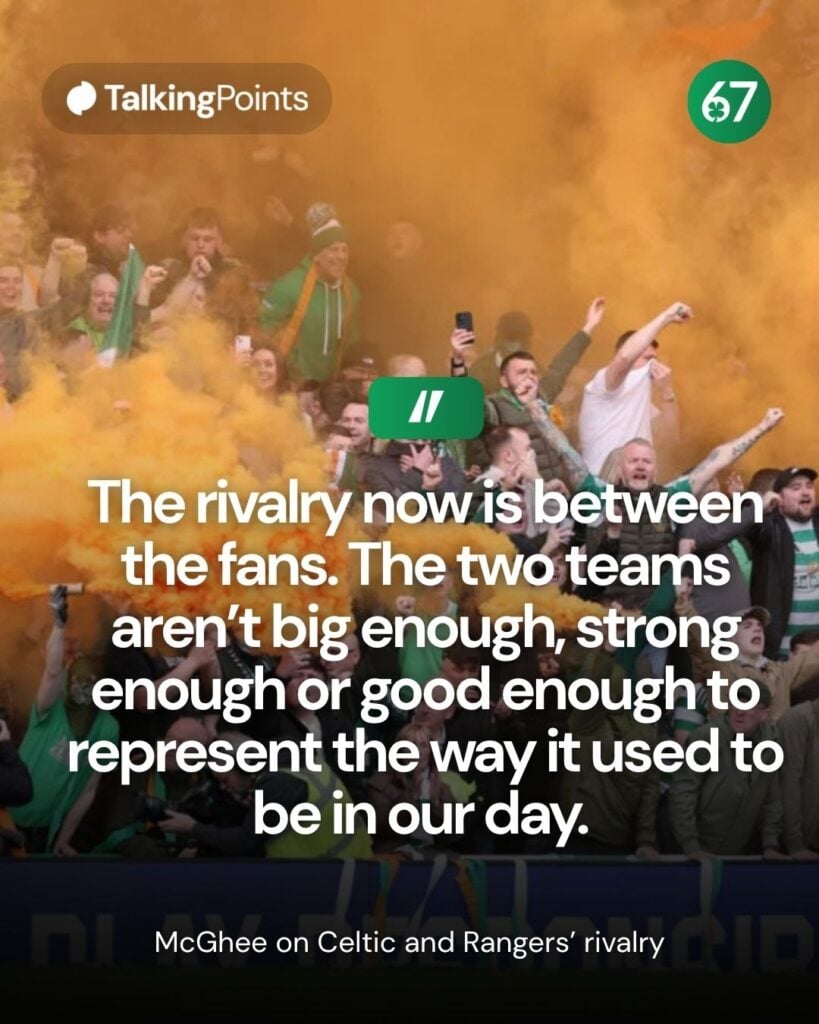
The former Celtic striker delivered a blunt assessment: ‘The rivalry now is between the fans. The two teams aren’t big enough, strong enough or good enough to represent the way it used to be.’
McGhee’s viewpoint is particularly interesting because it stems directly from his lived experience.
He played in this fixture when the Glasgow derby was arguably at its absolute peak – a golden era defined by elite quality on the pitch and the electric, tribal atmosphere generated by massive away allocations.
If you look back to the years before Martin O’Neill’s transformative arrival at Parkhead, and certainly during his early tenure, these matches were fiercely contested by genuine European heavyweights who could walk into almost any side in Britain.
But does McGhee have a point that it’s now all changed?
Has Celtic and Rangers’ rivalry changed?
Share your thoughts…

Has the landscape of the Celtic and Rangers rivalry changed?
There is no denying that the modern financial landscape has forced a drop in the sheer calibre of players taking to the field.
Scottish football simply cannot compete with the riches of the modern game. However, to claim the teams aren’t ‘strong enough’ to carry the rivalry perhaps misses the mark.
In recent years, the fixture has been hollowed out by severely reduced or completely non-existent away allocations.
The recent Scottish Cup clash at Ibrox offered a tantalising glimpse of the old days, with over 7,000 Celtic supporters packed into the Broomloan Stand to roar their team to a dramatic penalty shootout victory.
Sadly, the chaotic post-match scenes at Ibrox have likely pushed the away ticket debate right back to square one.
Yet, despite these setbacks, the Glasgow derby undeniably remains the biggest and most volatile fixture in Britain.
The animosity and stakes are just as high today, even if the names on the shirts lack the global weight of McGhee’s era, as he spoke about it all on talkSPORT.
Jim White: “Mark, how sad is that. We won’t see Celtic fans at Ibrox, and Rangers fans at Celtic Park.”
McGhee: “It’s tragic. I have played in enough of them to understand what it feels like to play in, and it’s fantastic. You relish playing in games like that. Punters relish being in games like that. They relish that rivalry. They want to be there.
“That there (at Ibrox in the Scottish Cup) was diabolical. The outcome is going to be that there won’t be both sets of supporters there. I think it’s such a shame.”
White: “I don’t know where you sit on it, and we will get into interesting territory with it. The Green Brigade at Celtic and the so-called Union Bears at Rangers. These so-called ultras.
“Is it time to kick them out?”
McGhee: “I think it’s certainly time to talk to them. There has to be some sort of communication. You have to understand what it is they are feeling. There has to be some sort of discussion. In this day and age, I don’t think there is any place for that sort of extremism if you like in both grounds. It’s something that has to be stopped.
“It’s not going to be stopped by evicting them. It’s going to be stopped by some sort of compromise.
“The rivalry now is between the fans. The two teams aren’t big enough, strong enough or good enough to represent the way it used to be in our day.
“I played in games where there were five players sent off. It’s always happened. I think now it’s the fans, and not on the pitch. That’s a shame, because it has to get back to the quality on the pitch. That’s the main thing.”
Receive a digest of our best Celtic content each week direct to your mailbox